
Real fish
The rarest fish in the world
In short
- The rarest fish in the world is usually said to be the Devils Hole pupfish: one pool in Death Valley, and some counts under 40 fish.
- Others include the red handfish (around 100 adults), the coelacanth (thought extinct until 1938) and the sturgeons; deep-sea fish like the black seadevil are rarely seen alive.
- The priciest aquarium fish are deep-reef rarities like the peppermint angelfish (about $30,000) and the platinum arowana.
The rarest fish in the world is usually said to be the Devils Hole pupfish: its whole wild population lives in one warm pool in the Nevada desert, and some counts have found only a few dozen fish. But "rare" can mean different things. Some fish are nearly gone, some live in one tiny spot, some are so deep they are almost never seen alive, and some are so scarce in the aquarium trade that a single fish sells for the price of a car.
Here are twelve of the rarest fish on Earth, why each one is so hard to find, and what is being done to keep them. At the end: how rarity works in our own game of alien fish.
What makes a fish rare?
- Very few left. The population has crashed, usually from habitat loss, dams, overfishing or pollution. These fish are listed as Critically Endangered.
- A tiny home range. Some species have only ever lived in one lake, spring or reef, so even a healthy population is small and fragile.
- Almost never seen. Many deep-sea fish may be common down there, but people have seen them alive only a handful of times.
- Rare in the trade. A few reef and river fish are collected so seldom that aquarium keepers pay thousands of dollars for one.
The rarest fish at a glance
| Fish | Where | Why it’s rare |
|---|---|---|
| Devils Hole pupfish | One pool in Death Valley, Nevada | Tiny range; some counts under 40 fish |
| Red handfish | Two small reefs in Tasmania | Around 100 adults left |
| Coelacanth | Western Indian Ocean; Indonesia | Thought extinct until 1938; few hundred known |
| Mekong giant catfish | Mekong River | Dams and fishing; Critically Endangered |
| Adriatic sturgeon | Rivers of northern Italy | Possibly gone from the wild |
| Sakhalin sturgeon | Russian Far East | Very few spawning adults |
| Smalltooth sawfish | Warm Atlantic coasts | Caught in nets; much of its range lost |
| Black seadevil | Deep ocean, worldwide | Seen alive only a few times |
| Barreleye | Deep Pacific | Rarely filmed alive |
| Peppermint angelfish | Deep reefs, Cook Islands | Collected very rarely |
| Masked angelfish | Deep reefs, Hawaii | Rare and costly in the trade |
| Platinum arowana | A colour form of a river fish | A rare mutation |
Devils Hole pupfish: the rarest fish in the world
The Devils Hole pupfish (Cyprinodon diabolis) is a small, bright blue fish about 2.5 cm long. Its only natural home is Devils Hole, a water-filled crack in the limestone of Death Valley National Park, in Nevada. The water is about 33 °C and low in oxygen, and the fish feed and lay their eggs on one shallow rock shelf only a few metres across near the surface.
Divers have counted the fish twice a year since the 1970s. In 2013 the count fell to just 35 fish, and some recent spring counts have again found only a few dozen. Its pool is so important that in 1976 the US Supreme Court limited nearby groundwater pumping to keep the water level up for it. A backup population now lives in a full-size copy of the pool at a nearby conservation facility.
Red handfish: a fish that walks
The red handfish (Thymichthys politus) does not really swim: it walks along the sea floor on fins shaped like hands. It lives on just two small patches of reef in south-east Tasmania, and scientists estimate there are only around 100 adults left.
Handfish lay their eggs on stalks of seaweed and don’t drift as larvae, so a population can’t spread to new reefs by itself. Conservation teams have raised young in aquariums and returned them to the wild, and even planted artificial "spawning sticks" for the females to lay on.
Coelacanth: the fish back from the dead
Scientists knew the coelacanth only from fossils and thought it had died out around 66 million years ago, with the dinosaurs. Then in 1938 a museum curator in South Africa, Marjorie Courtenay-Latimer, found one in a fisherman’s catch. A second species turned up in Indonesia in the late 1990s.
Coelacanths are large (up to about 2 metres), live in caves 150 to 700 metres down, and move their fleshy, lobed fins in a pattern like walking. A 2021 study suggested they can live for about 100 years and take decades to mature, which is one reason they are so slow to recover. The western Indian Ocean coelacanth is listed as Critically Endangered.
Mekong giant catfish: a giant that’s vanishing
One of the biggest freshwater fish on Earth, the Mekong giant catfish (Pangasianodon gigas) can grow to around 3 metres. A fish caught in northern Thailand in 2005 weighed 293 kg, the largest freshwater fish ever recorded at the time.
It migrates long distances up the Mekong to breed, and dams, fishing and river changes have cut its numbers sharply. It is Critically Endangered, and catching it is banned in Thailand, Laos and Cambodia.
Sturgeons: the most threatened fish family
Sturgeons are ancient, armoured fish that have barely changed in millions of years, and they are now the most threatened group of animals assessed by the IUCN: in 2022 it reported that all 26 surviving species are threatened with extinction, mostly from overfishing for caviar and dams that block the rivers they breed in.
Two of the rarest are the Adriatic sturgeon, which may no longer breed in the wild at all and survives thanks to fish farms and restocking in Italy, and the Sakhalin sturgeon of the Russian Far East, with very few spawning adults left.
Sawfish: a saw-nosed ray in trouble
Sawfish are rays with a long, flat snout lined with teeth on both sides, which they slash through schools of fish. Every species is threatened. The smalltooth sawfish once lived along much of the warm Atlantic coast but now survives mainly in south-west Florida and the Bahamas. Its toothed saw tangles easily in fishing nets.
Black seadevil: a deep-sea anglerfish almost no one has seen alive
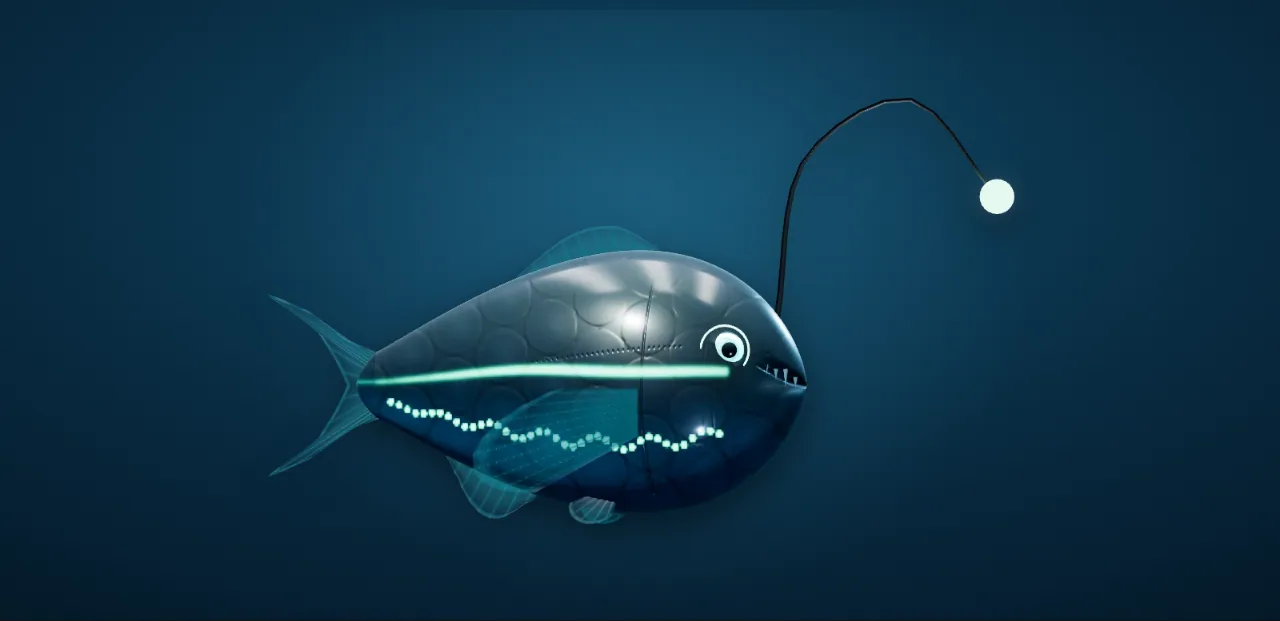
The black seadevil (Melanocetus johnsonii) is a fist-sized deep-sea anglerfish with needle teeth and a glowing lure on its head. It probably isn’t rare in the deep sea, but it lives so far down that it was first filmed alive only in 2014, by the Monterey Bay Aquarium Research Institute, about 600 metres down.
In 2025 one was filmed swimming near the surface off Tenerife in the Canary Islands, which made headlines worldwide because almost nobody had ever seen one in daylight. Read more about anglerfish and other deep-sea fish.
Barreleye: the fish with a see-through head
The barreleye (Macropinna microstoma) has a transparent dome over its head with two glowing green eyes inside that can swivel to look up or forward. It lives 600 to 800 metres down in the Pacific and was first filmed alive in a healthy state only in 2009. More about the barreleye.
The rarest and most expensive aquarium fish
In the aquarium trade, "rare" usually means a fish that is very hard to collect, often because it lives on deep reefs below normal diving depth. These fish are sold by a few specialist dealers, and prices are reported rather than listed, so treat them as rough figures.
| Fish | Where it lives | Reported price |
|---|---|---|
| Platinum arowana | A white colour form of the Asian arowana | Reportedly hundreds of thousands of dollars |
| Peppermint angelfish | Reefs 50–150 m deep, Cook Islands | About $30,000 |
| Masked angelfish | Deep reefs of the Hawaiian Islands | Thousands to over $10,000 |
| Bladefin basslet | Deep Caribbean reefs | About $10,000 |
The platinum arowana is a natural mutation: a rare white form of a river fish, much like an albino. In our game, Albino and Glass finishes are rare traits for the same reason. See the most striking fish patterns and colours.
Fish we’ve already lost
Rare fish can disappear. The Chinese paddlefish, a river giant of the Yangtze that could reach 7 metres, was last seen alive in 2003 and was declared extinct in 2022. Dams that blocked its migration and overfishing in the 1970s and 80s are blamed. It is a reminder of why the counts, captive backups and river protections for the fish above matter.
How rarity works in Fish of Ganymede
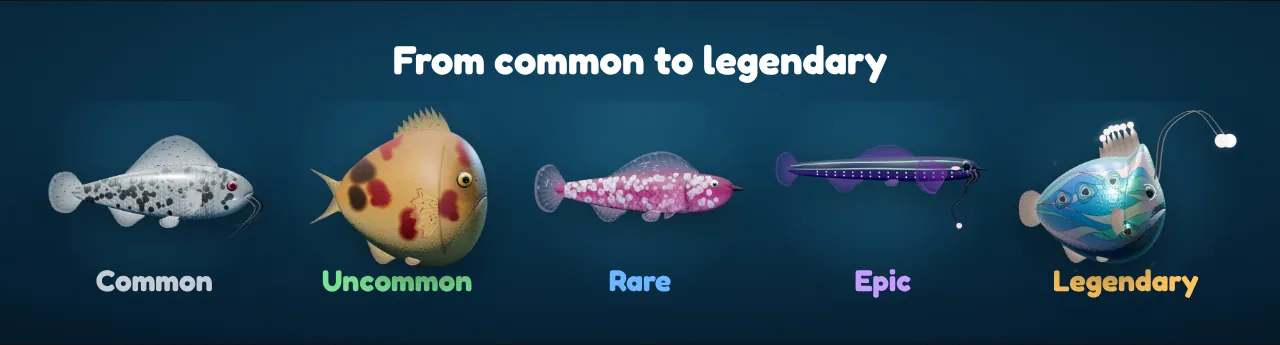
In Fish of Ganymede, a free browser game set in the hidden ocean of Jupiter’s moon Ganymede, rarity is part of every fish’s genes. Each trait has a rarity from Common to Legendary, and a fish is graded by the rarest traits it shows.
A legendary trait turns up on only about 1 in 100 traits from a dive near the surface (deeper water is kinder), and the mythic traits, such as aurora scales and comet fins, hatch only from Mythic eggs, about 1 in 5,000 eggs under the ice. Rare traits are often recessive, so like a real breeding programme you can only bring them out by pairing two carriers. How fish genetics work in the game.
Questions
What is the rarest fish in the world?
The Devils Hole pupfish, which lives only in one pool in Death Valley National Park, Nevada. Its population fell to 35 fish in 2013, and some recent counts have found only a few dozen.
How many Devils Hole pupfish are left?
It changes with the season and the year: spring counts have sometimes found only a few dozen fish, autumn counts more. There is also a backup population at a conservation facility nearby.
What is the most expensive fish in the world?
Among aquarium fish, the platinum arowana is reported to have sold for hundreds of thousands of dollars. Among food fish, single bluefin tuna have sold for well over a million dollars at New Year auctions in Tokyo.
Is the coelacanth still alive?
Yes. Thought extinct for 66 million years, it was found alive in 1938 off South Africa, and a second species was found in Indonesia in the late 1990s. Both are rare and protected.
What is the rarest deep-sea fish?
It’s hard to say, because many deep-sea fish are rarely seen rather than truly rare. The black seadevil, a deep-sea anglerfish, was first filmed alive only in 2014.
More guides
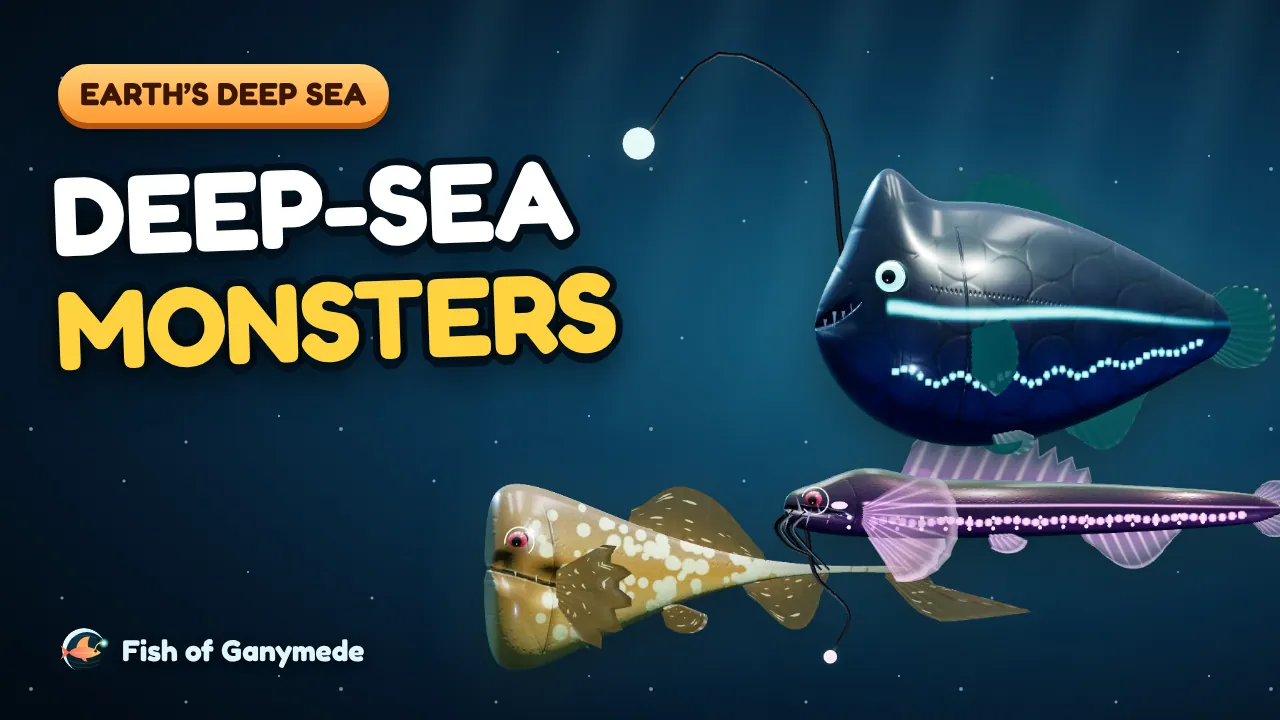 The real deep-sea fish behind our alien fishThe strangest real deep-sea creatures: anglerfish, dragonfish, the gulper eel, barreleyes and hatchetfish. How they hunt, glow and survive in the dark.
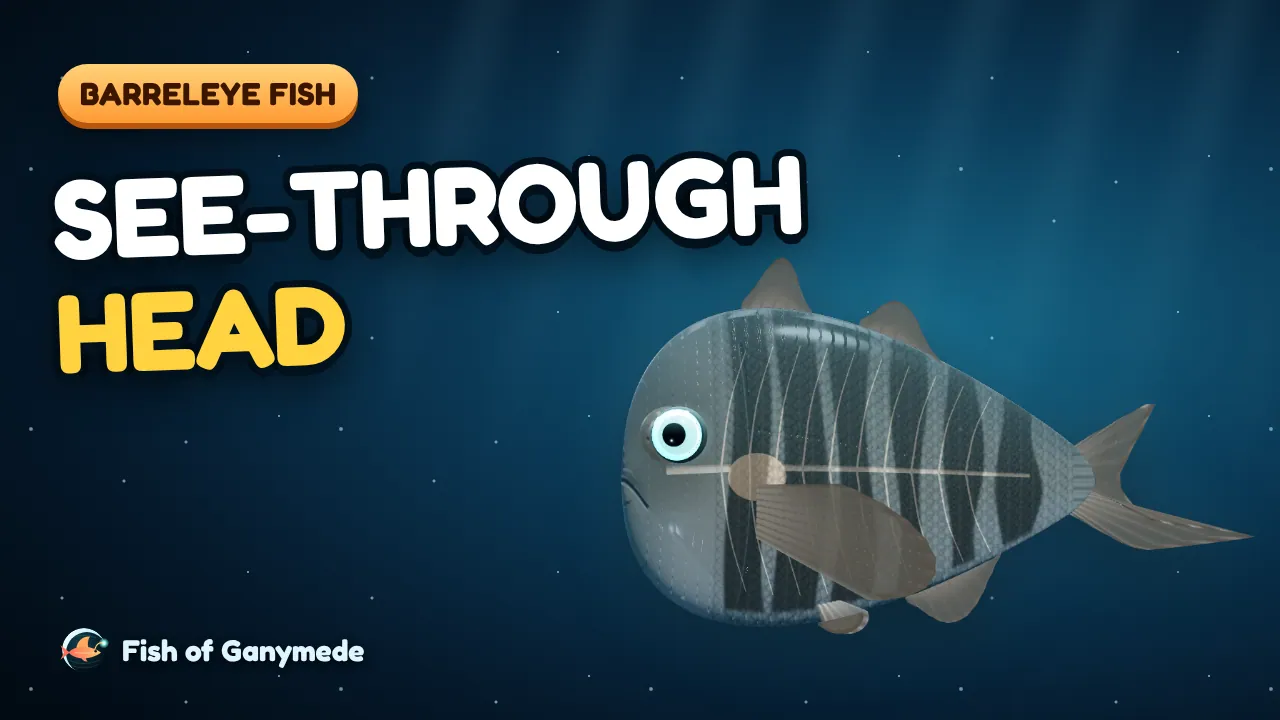 The barreleye: a fish with a see-through headThe barreleye fish has a transparent head and green tube eyes that can turn to look forward. Facts about Macropinna microstoma, where it lives and how it hunts.
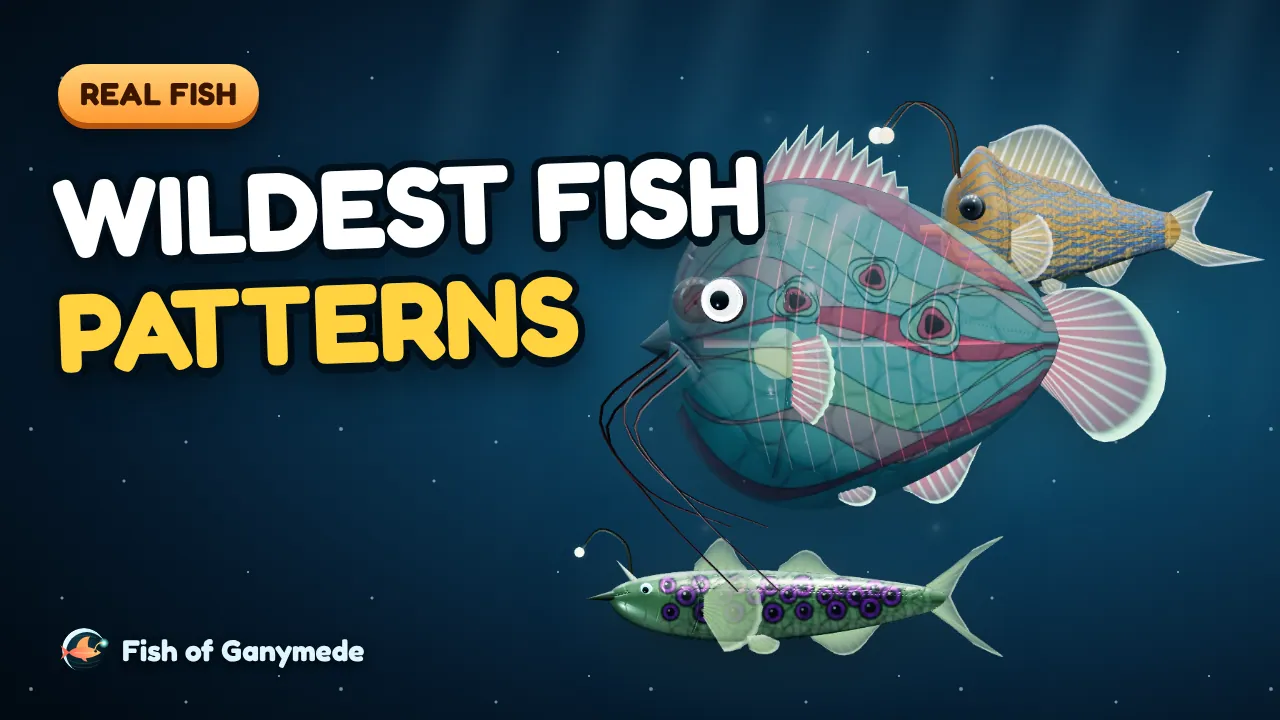 The wildest fish patterns and colours on EarthThe wildest real fish patterns and colours: the mandarin fish’s swirls, discus mazes, koi colours, albino and see-through glass fish, and why they look that way.