
Real fish
The wildest fish patterns and colours on Earth
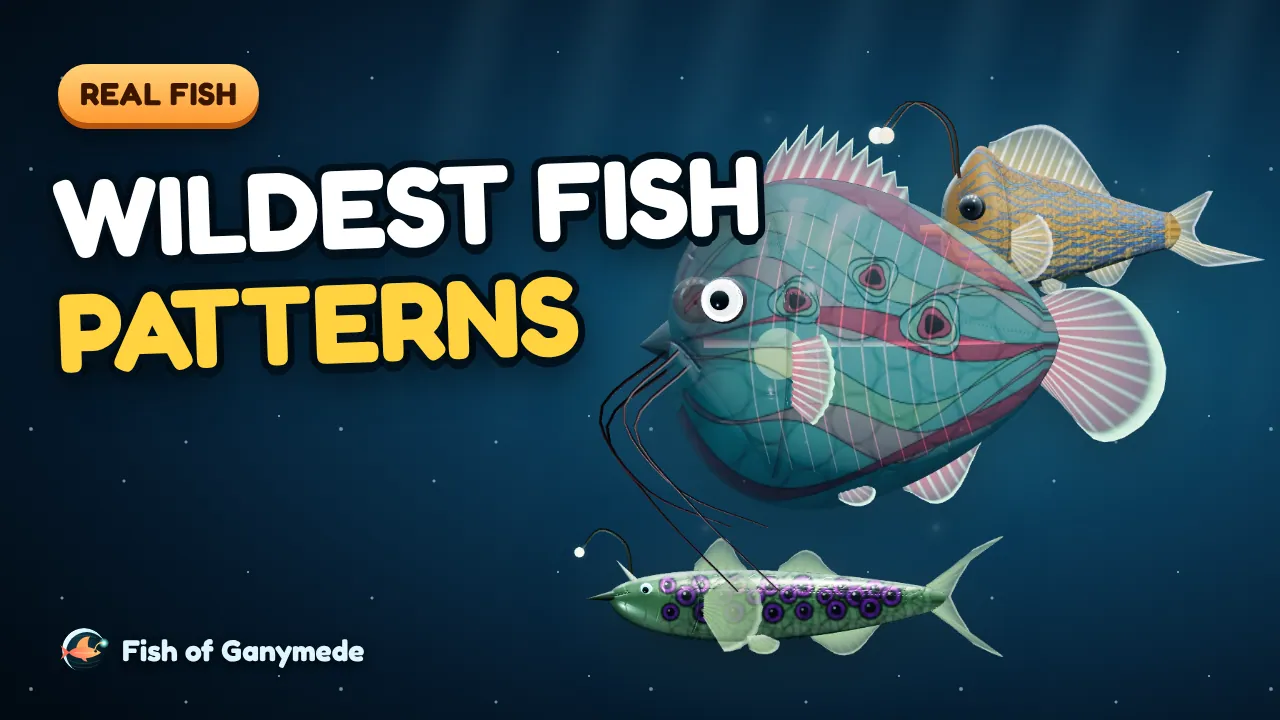
Some real fish look as if someone painted them. Their patterns hide them, warn hunters off, attract mates or come from centuries of breeding by people. These are some of the most striking, and the patterns in Fish of Ganymede that they inspired. (The pictures here are our alien fish; the facts are about the real ones.)
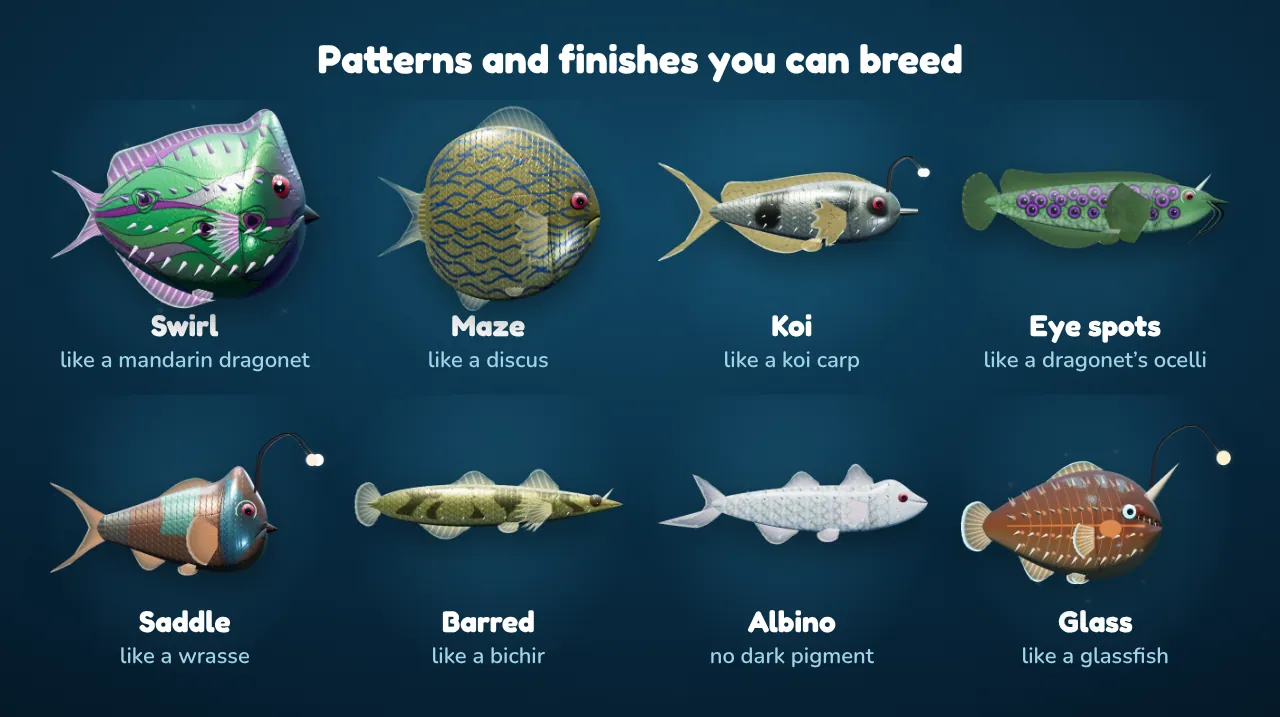
Mandarin fish: swirls of true blue
The mandarin fish, or mandarin dragonet (Synchiropus splendidus), is a small reef fish from the western Pacific, about 6 cm long, covered in orange and blue swirls with dark outlines. It is one of very few animals with a true blue pigment; most blue animals get their colour from structures that scatter light.
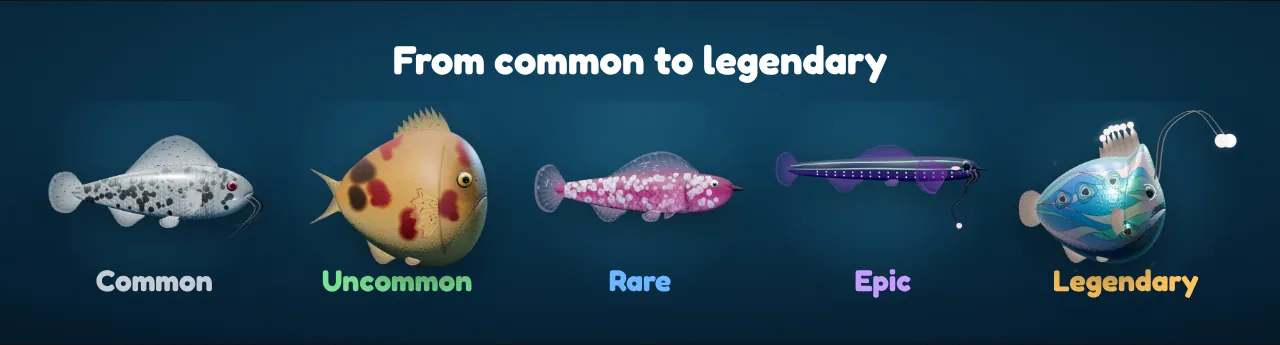
It has no scales and is coated in thick, bad-tasting mucus, so its loud colours may be a warning. It is shy and feeds on tiny crustaceans among the coral. Our Swirl pattern, one of the game’s legendary traits, is inspired by it.
Discus: living mazes
Discus (Symphysodon) are round, flat cichlids from the Amazon. Wild discus have wavy lines and bars, and breeders have created many colour strains since the 1970s. Discus parents feed their young with a special mucus from their own skin for the first weeks.
Our epic Maze pattern borrows their wandering lines.
Koi colours
Koi are ornamental carp first bred in Japan’s Niigata region around 200 years ago. Breeders sort them into varieties by colour and pattern: Kohaku is white with red, Taisho Sanke adds black spots on white, and Showa is black with red and white. Fish of Ganymede has a Koi pattern of bold patches on a pale body.
Eye spots, saddles and bars
- Eye spots (ocelli): many fish, like the foureye butterflyfish, have a dark ringed spot near the tail. It may make hunters strike the wrong end. Dragonets and some cichlids are covered in them. In the game, Eye spots is an epic pattern.
- Saddles: wrasses such as Hawaii’s saddle wrasse wear bold blocks of colour across the head and back. Our rare Saddle pattern does the same.
- Bars: bichirs and many river fish have dark camouflage bars that break up their outline among plants and roots. Our Barred pattern is uncommon.
Albino fish
An albino fish lacks melanin, the dark pigment, so it is white, pink or pale yellow, and its eyes look red or pink because blood vessels show through. Albinism is usually recessive, so it needs a copy from both parents. That is why albino fish are rare in the wild and why breeders can still produce them reliably once they have the gene (albino corydoras, bristlenose plecos and tiger barbs are common in shops).
Leucistic fish are different: they lose some pigment but keep dark eyes. In Fish of Ganymede, Albino is a legendary finish with a white body, pale pink fins and red eyes, and like the real thing it is hard to breed.
Glass fish
Some fish are almost transparent. The Indian glassfish shows its spine and organs through clear skin, and the glass catfish swims in see-through shoals. Being clear is a kind of camouflage in open water.
Sadly some glassfish are sold injected with dye to look colourful, which harms them; avoid “painted” fish. In the game, the epic Glass finish shows a faint skeleton and a softly glowing core through a clear body.
Breed these patterns yourself
Patterns in Fish of Ganymede are genes, with dominant and recessive versions, so you can breed for them over generations. See the genetics guide for how it works, then start breeding, free in your browser.
Questions
Why is the mandarin fish so colourful?
Its bright blue comes from a true pigment, which is very rare in animals, and its loud colours may warn predators that its slimy, bad-tasting skin isn’t worth eating.
Why do albino fish have red eyes?
Without melanin in the eye, nothing blocks the view of the blood vessels behind it, so the eyes look red or pink.
What is the difference between albino and leucistic fish?
Albino fish lack melanin completely and have red or pink eyes; leucistic fish lose some pigment but keep dark eyes.
More guides
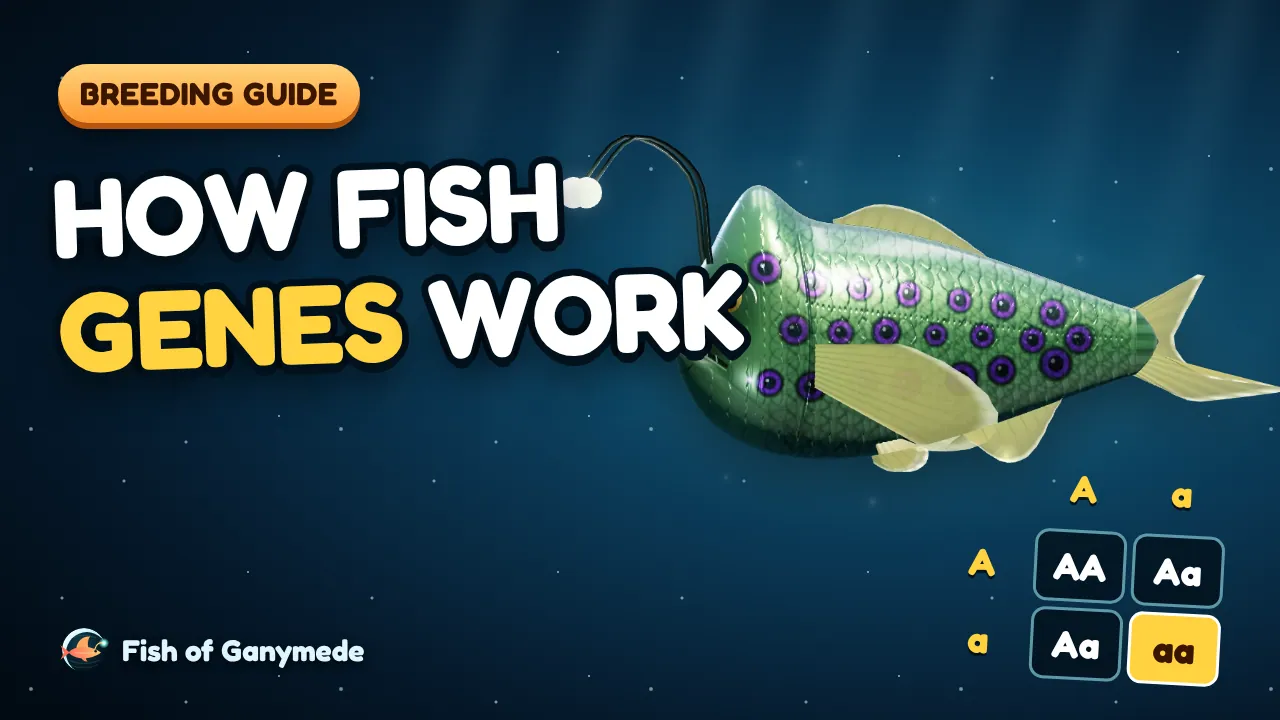 How fish genetics work: dominant, recessive and mutationsDominant and recessive traits, Punnett squares, mutations and breeding odds, explained simply with real examples from a genetics game you can play free.
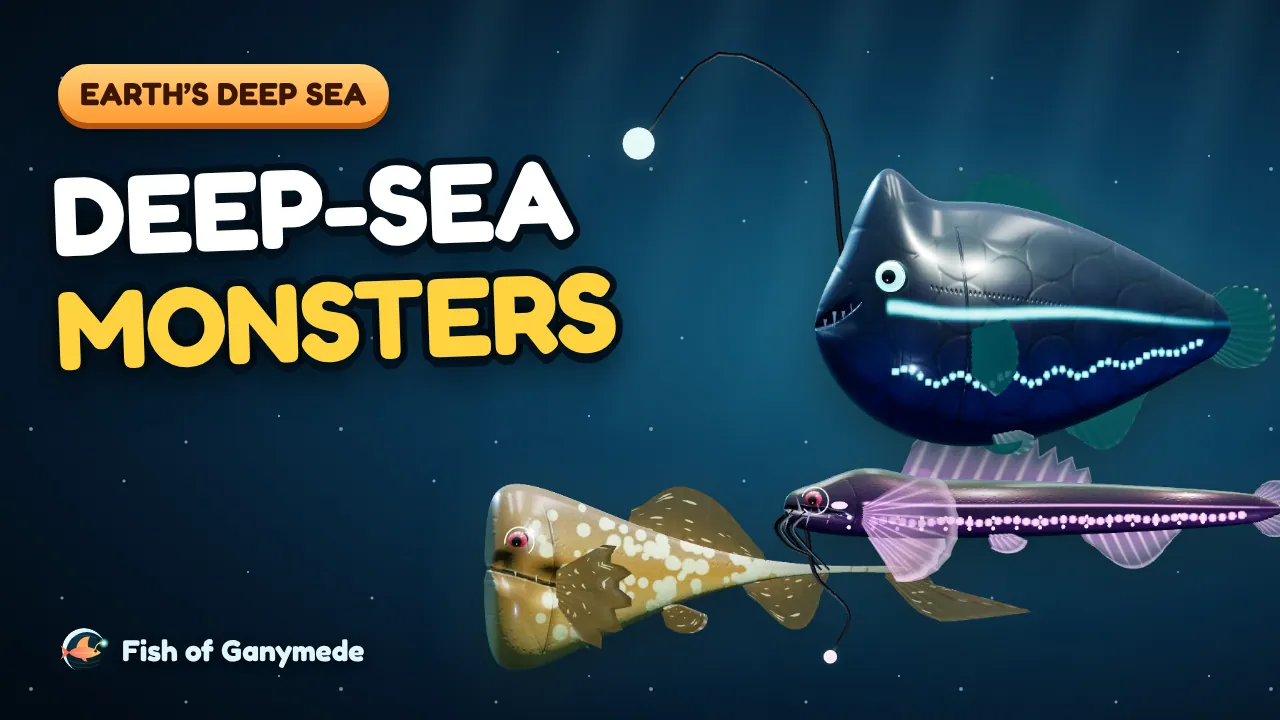 The real deep-sea fish behind our alien fishThe strangest real deep-sea creatures: anglerfish, dragonfish, the gulper eel, barreleyes and hatchetfish. How they hunt, glow and survive in the dark.
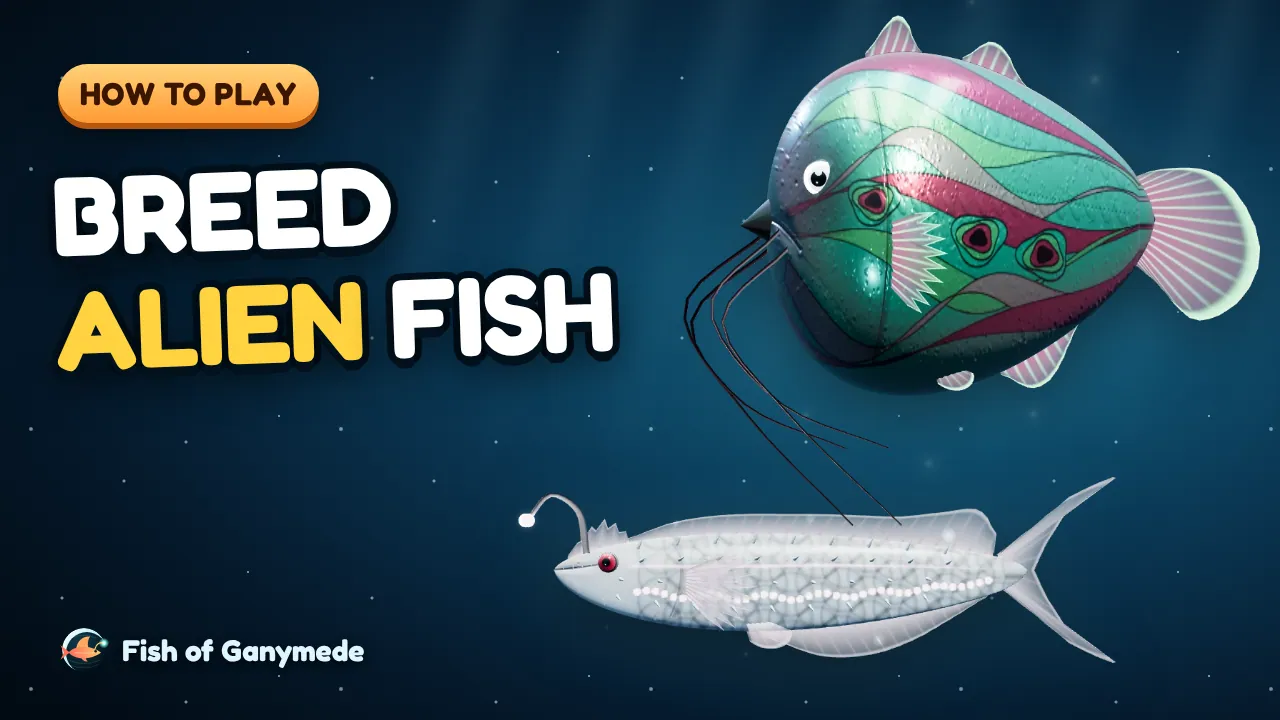 A fish breeding game where every fish is one of a kindA free online fish breeding game in your browser. Pair fish, see the exact odds of every trait, hatch eggs and discover species no one has bred before.